


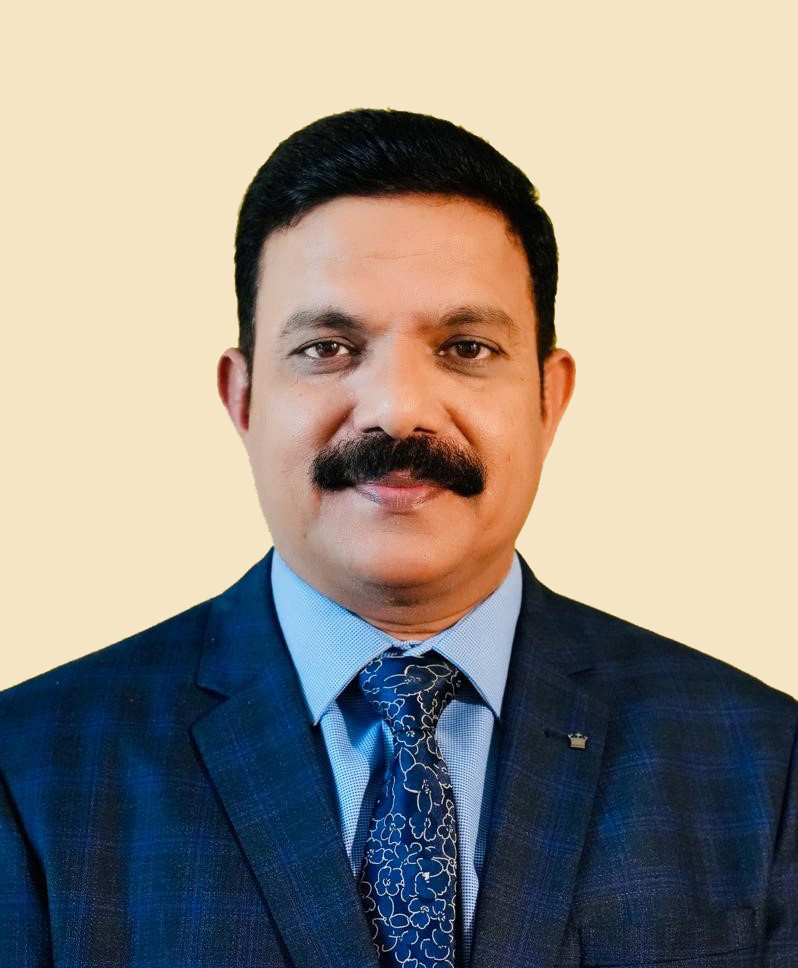
Director's Message

The ICAR-Indian Sugarcane Research Institute (ISRI), Lucknow, has been working on a mission to enhance sugarcane production, productivity, profitability, and sustainability to meet future sugar and energy requirements in India for 75 years since its establishment. Research, extension, and academic activities of the institute, along with collaborative work with the sugarcane and sugar network of India, have placed India at the second position in sugar production in the world. Today the country holds a 19-20% share in sugar production, after Brazil, and produced 27.33 mt of sugar in 2025-26 with the aid of about 541 sugar mills spread across the country. Sugarcane and the sugar industry are also contributing significantly with approximately 13% ethanol blending in fuel, power generation, and diversified products as well as socioeconomic support to rural India. Sugarcane farming, the ultimate source of this industry, presently covers approximately 5.73 million hectares of cultivable land in India and, according to 2025-26 estimates, contributed about 475.61 mt of sugarcane with an average productivity of 82 t/ha.
The continuing efforts by ISRI in 75 years of its journey have ensured that we continue to be a significant technological contributor for the sugarcane and sugar sectors of India, particularly in the subtropical belt. The new sugarcane varieties from the institute, like CoLk 14201, CoLk 16202, and CoLk 16470, are making a big difference in this area, while quality seeds of the commercial varieties are being supplied through the online seed portal. This innovative approach not only enhances productivity but also supports farmers in adapting to changing agricultural demands. As a result, ISRI is poised to play a crucial role in the future of sustainable sugarcane cultivation, fostering both economic growth and environmental stewardship. The Accredited Testing Lab developed under NCS-TCP provides its services for testing the quality plantlets developed through micropropagation in sugarcane. The application of nano-fertilizers like nano-urea, integrated weed management practices, and development of farmer-friendly apps like Ikshu Kedar and Fertilizer Calculator by the institute for enhanced resource use efficiency are undoubtedly a part of holistic precision agriculture strategies. UAV-based crop protection practices have been taken up by the institute to standardize herbicide, fungicide, and insecticide application through drones. This is a significant step toward ensuring the timely application of chemicals and efficient utilization of resources. ISRI efforts are unprecedented in all dimensions of research, extension, and academic activities.
However, with ambitious initiatives like Viksit Bharat 2047 in place at the national level, the demand for sugarcane, sugar, and ethanol needs to be a major concern for the future. Estimates from various sources indicate that the country average cane yield will have to be 100-110 t/ha with 12% sugar recovery to meet 50 million tons of domestic and export demands of sugar. Further, the sugarcane sector is facing challenges in the form of slow varietal replacement, uneven spatial productivity patterns, crop losses due to insects, pests, and diseases, declining quality and quantity of resources, climate change, fragmented landholdings, etc. These targets as well as the challenges in the sugar sector demand improved and sustainable strategies that can result in enhanced productivity and profitability for all the stakeholders.
To address these challenges and achieve the demand of the sugarcane and sugar sector, there is a need for strategic and integrated technological interventions in various dimensions of sugarcane research and extension. Therefore, the institute is now focusing on adopting biotechnological and molecular approaches to identify high-yielding, disease-resistant, and climate-resilient varieties. Tissue culture techniques, bud-chip methods, participatory seed systems, and online seed supply and monitoring platforms are being adopted by ISRI to make a quality seed chain. The institute is on its way to writing new chapters to intervene in advanced digital technologies such as IoT, GIS, GPS, UAV, robotics, Al-ML, blockchain, etc. for precision in resource utilization and protection from stresses. Biological control practices of managing stresses as well as natural farming practices are being promoted to maintain sustainability in this sector. Mechanization is being focused not only on planting and harvesting activities but also on small equipment for farmers of small holdings. Al-based real-time farm advisory, promotion of HRD activities, entrepreneurship development among youths, FRP/SAP pricing policies, and fruitful collaborations with various stakeholders are some important focusing areas of our work.
(S N Sushil)